Automated object recognition
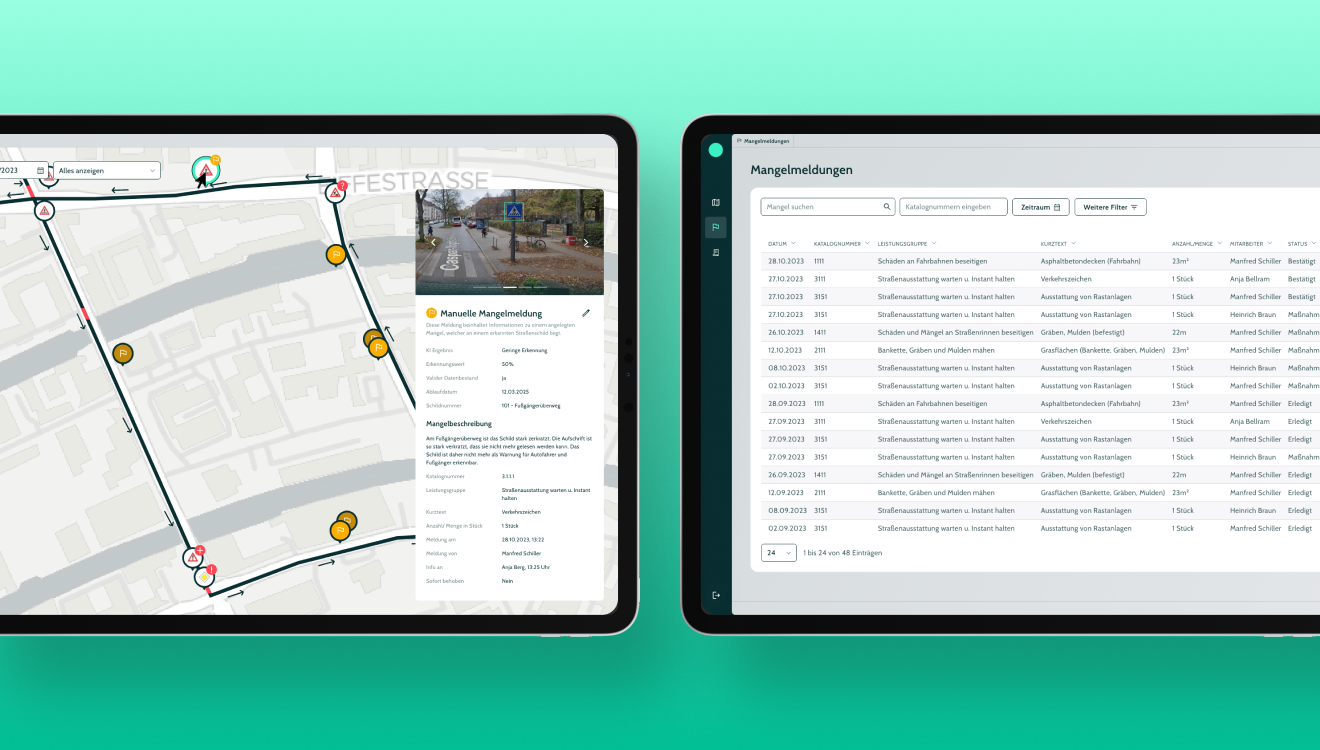
The system uses neural networks to automatically identify road signs, damage and soiling. This has reduced manual checks by over 60% - while at the same time increasing detection accuracy.
The system uses neural networks to automatically identify road signs, damage and soiling. This has reduced manual checks by over 60% - while at the same time increasing detection accuracy.
All analysis and storage processes are GDPR-compliant and take place in a secure cloud environment. Data protection impact assessments (DPIA) guarantee the highest standards of data security and governance.
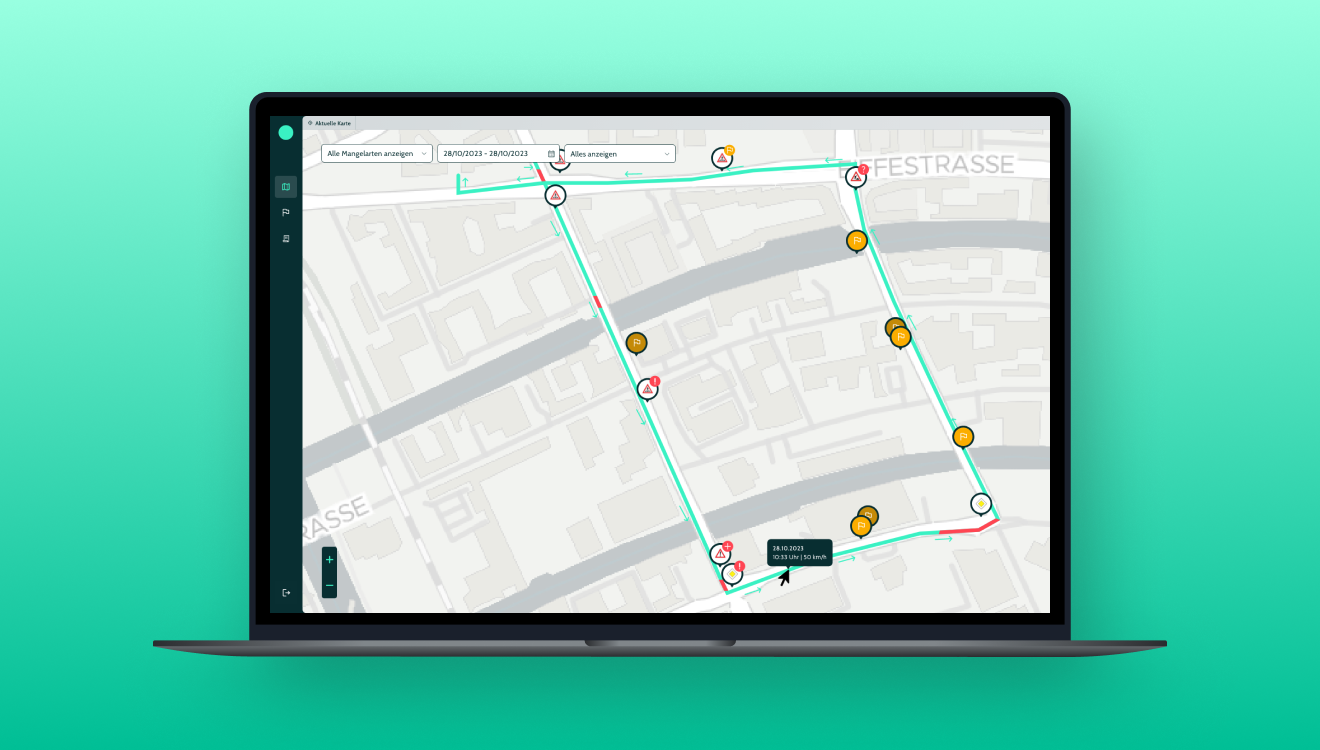
A user-friendly web interface visualizes the results clearly and concisely. Damage, maintenance requirements and priorities can be tracked intuitively and processed in a targeted manner.
Joint workshops with the ministry's specialist departments defined requirements, data sources and security guidelines. The technical concept was created on this basis.
TensorFlow was used to train AI models for object recognition and damage classification. Specially curated image data sets and depth detection algorithms were used.
Angular was used to create a user-friendly web application that visualizes AI results in real time and automates data entry.
Back-end integration in C# enables scalable processing of large volumes of data. Cloud services ensure secure storage, analysis and provision of results.
To ensure maximum reliability, the system was tested under various weather conditions such as rain, snow and darkness and iteratively improved.
The final platform was tested according to ISO and GDPR standards and released for productive use - with continuous performance monitoring and feedback loops.
Result
The new AI platform has enabled the BMVI to fundamentally modernize its inspection processes. Automated detection, secure data processing and clear visualization lead to shorter response times, higher data quality and efficient use of resources.
Reduction of manual processes by 60%
GDPR-compliant cloud architecture with high data security